Preserve Muscle During Weight Loss For Women
Lose the Weight, Keep the Muscle? Only If You Do the Work.
Part of The Body Conversation: Muscle, Metabolism & the Future You
Let's have an honest conversation.
There are more ways to lose weight today than ever before. GLP-1 medications. Gastric bypass. The sleeve. Old-school dieting. Weight-loss pills, both prescription and off the shelf.
Women ask me about all of them.
And here's the part almost no one tells you before you start:
Every single one of these methods will cost you muscle if you don't do the work to protect it.
Not might. Will.
The method you choose changes how fast the weight comes off. It does not change the rule underneath it. When the body loses weight, it doesn't only burn fat. It also breaks down muscle, unless you give it a reason not to.
That reason is strength training, protein, and habits you actually keep.
The Truth Nobody Puts in the Brochure
Why every weight-loss method shares the same blind spot
Whether the scale moves because of surgery, a medication, a meal plan, or a pill, your body is responding to one thing: a calorie deficit.
A deficit is what creates weight loss. But your body doesn't read a label that says "burn fat only." When it needs energy and you're not protecting your lean mass, it will pull from muscle right alongside fat.
Research on weight loss is remarkably consistent here. A meaningful share of the weight people lose, sometimes a third or more, can come from lean tissue, not fat, when strength training and adequate protein are missing.
That's true for:
GLP-1 medications (Ozempic, Wegovy, Zepbound, Mounjaro)
Gastric bypass
The gastric sleeve
Classic calorie-cutting and dieting
Weight-loss pills
Same rule. Different speed.
The GLP-1 isn't special in this regard. It isn't more "nuanced" than a diet. It just works faster, which means the muscle loss can show up faster too if you're not paying attention.
Faster results, same homework.
Why Muscle Is the One Thing You Can't Afford to Lose
Especially in Peri-Menopause and Menopause
Here's why I won't let this go.
Muscle is not about looking toned. Muscle is your metabolic engine, your blood-sugar regulator, your bone protector, and one of the strongest predictors of how independent and capable you'll be in your 60s, 70s, and 80s.
Now layer in midlife.
Here's the truth: everyone loses muscle as they age, men and women alike. But women are at a disadvantage on two fronts. They start with less muscle to begin with, and during Peri-Menopause and Menopause the estrogen that helped protect that muscle and bone is declining. So women are losing ground from a lower starting point, with less natural defense. Drop into a fast, aggressive weight-loss phase without strength training on top of that, and you can accelerate a loss you'll spend years trying to rebuild.
So you can absolutely "succeed" on the scale and quietly set your future self back.
Smaller on the outside. Weaker on the inside.
That is not the win you're looking for.
What the Scale Won't Tell You
Two women, same number, completely different bodies
Picture two women who both lose 30 pounds.
One did it with rapid weight loss and no strength work. She's lighter, but softer, more fatigued, and her metabolism is now running on less muscle than she started with. The weight comes back easily, and when it does, it comes back as fat.
The other lost the same 30 pounds while strength training and eating enough protein. She held onto her muscle. Her metabolism is supported. Her body is firmer, stronger, and far more likely to hold its results.
Same number on the scale. Two completely different futures.
This is exactly why I tell every client that the scale is the least interesting number we track. As a fitness and nutrition coach, I care far more about what you're made of than what you weigh.
So What Actually Protects Your Muscle?
The non-negotiables, no matter which method you choose
If you take nothing else from this, take this list. These don't change whether you're on a GLP-1, recovering from surgery, or simply cleaning up your nutrition.
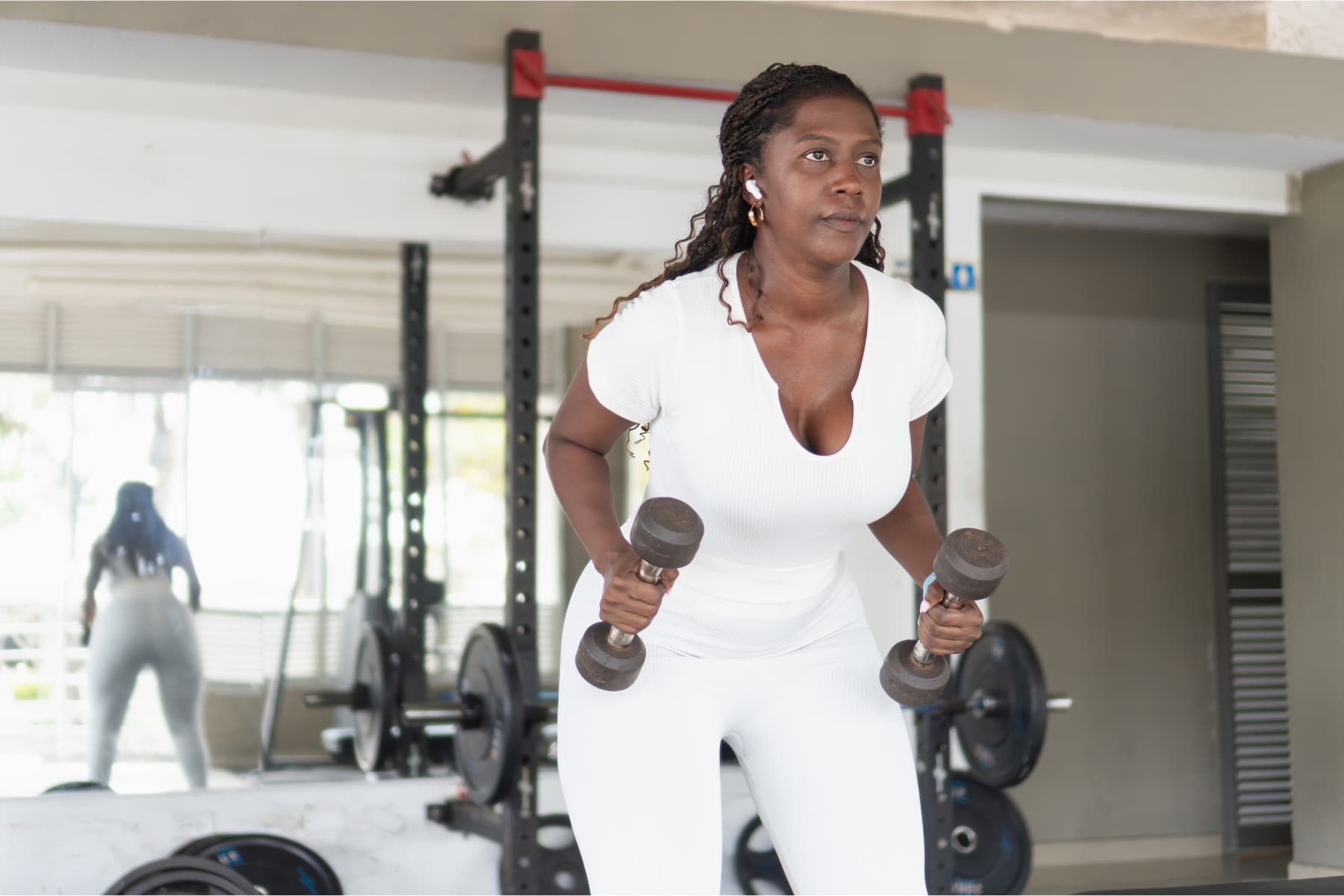
1. Strength train, on purpose, every week. Two to four sessions of real resistance training. Lifting tells your body that the muscle is needed, so it has a reason to keep it. This is the single most important thing you can do, and it's the thing most weight-loss plans skip entirely.
2. Eat enough protein. Most women in midlife are eating far less than they need. Protein gives your body the raw material to hold and build muscle while you're in a deficit. A nutrition coach for weight loss can help you set a realistic target and actually hit it on busy days.
3. Don't lose weight faster than you can build habits. Speed is the trap. If the weight comes off faster than your habits are forming, you have nothing to stand on when the medication stops or the diet ends. Sustainable change is built at the pace of your habits, not your prescription.
4. Get accountability. This is where most people fall apart, not from lack of knowledge, but lack of follow-through. A nutrition accountability coach keeps the strength training and protein from becoming the things you "mean to do" and never quite do.
A GLP-1, Surgery, or a Diet Is a Tool, Not a Strategy
The work is still yours
Let me be clear about where I stand. I coach women who are using every one of these tools, GLP-1s, surgery, prescriptions, and I am never anti-medication or anti-surgery. I've watched these tools change lives, and there is no shame in reaching for one. I tell my clients that directly.
But I tell them the next part just as directly: a tool is not a strategy.
A GLP-1 quiets the food noise. Surgery changes your capacity. A diet creates the deficit. None of them lift a weight for you. None of them build the habit. None of them protect the muscle.
That part is always yours to do, and it's the part that determines whether your results last six months or the rest of your life.
This is why working with a personal weight loss coach, a nutrition health coach, or an online nutrition coach for weight loss isn't a luxury layered on top of your method. It's the thing that makes your method actually work.
What to Track Besides the Scale
Strength progress (are your weights going up?)
Protein intake (are you hitting your target most days?)
Body fat percentage and lean mass, not just total weight
Energy across the day
How your clothes fit and how strong you feel
Women who keep their results treat their body like a long-term investment, not an emergency to fix by summer.
Final Word: Smaller Is Not the Goal. Stronger Is.
You can lose the weight a dozen different ways.
But if you skip the work, the strength training, the protein, the habits, you will lose the muscle too. And muscle is the one thing you'll be fighting to get back for the rest of your life.
So if you want to lose 20 lbs or more, choose your method if you need one. Then protect what matters.
Lose the fat. Keep the muscle. Build the woman who's still strong, capable, and thriving decades from now.
That's the future you. And she's built on the work you do today. 🦋
Author: Arnetra Shettleworth, Certified Nutrition and Lifestyle Coach and Certified Menopause Coaching Specialist
Butterfly Transformation Nutrition Coaching offers personal nutrition coaching and holistic nutrition coaching for women over 40 navigating Peri-Menopause and Menopause. If you're ready to lose weight without losing your strength, a personal nutrition coach and weight loss consultant can help you build a strategy that lasts. Book your session at btnutritioncoaching.com.